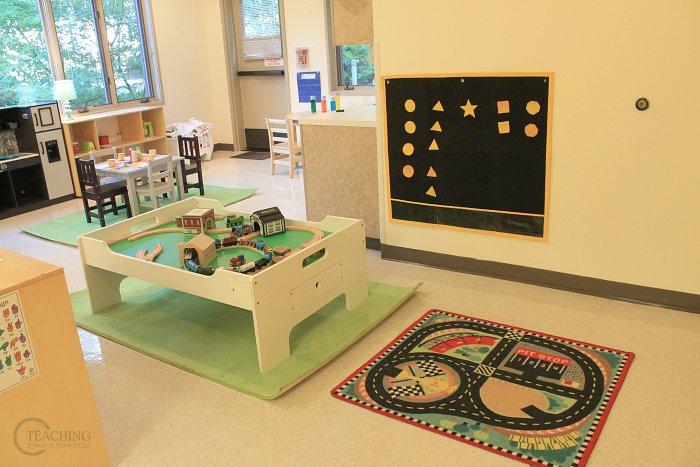
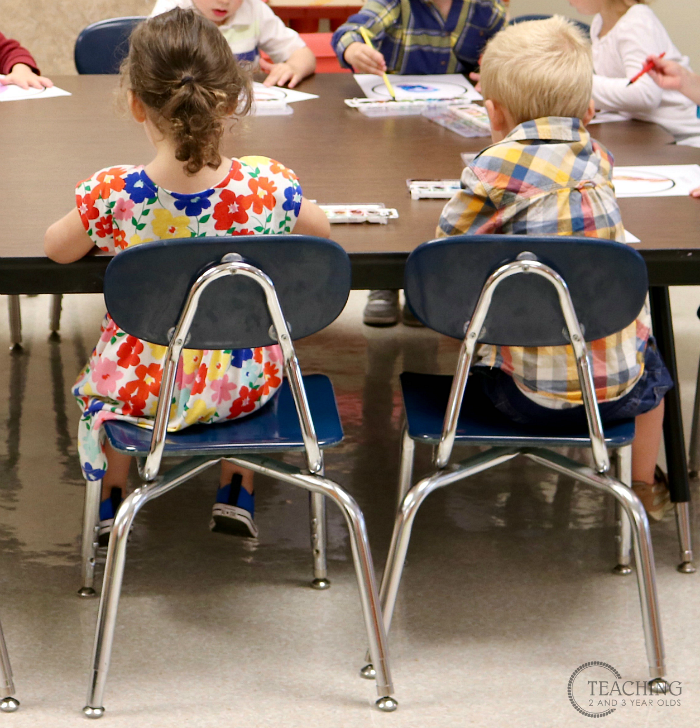
Toddlers love to play on the floor, so I also put down our Speedway Race Track Rug and our Service Station Parking Garage. Setting up the toddler classroom for the first day of school can feel overwhelming. What do I need to put out? How much should I put out? What activities work best on that first day? Will the toys I choose for my toddler classroom be fun, engaging, and promote learning? I had all of these questions and more when I first started teaching. And for many years beyond. It truly was trial and error before I realized how my toddler classroom should be set up. As I started my 20th year of teaching toddlers and preschoolers, I thought I had it all figured out. But I am still learning, as I will share in this post. They put too much out for the first day of school. (Well, the entire first week!) I know it’s hard, and I’ve talked about it in my YouTube videos, but less is best while you are getting to know your students. We must remember that this is their first time in your classroom (unless you are teaching them for a 2nd year), and the more you have out, the more overwhelmed they might be. This is a time when they are learning how to use the materials and how to put them away.
Pay Attention to How They are Using the Space
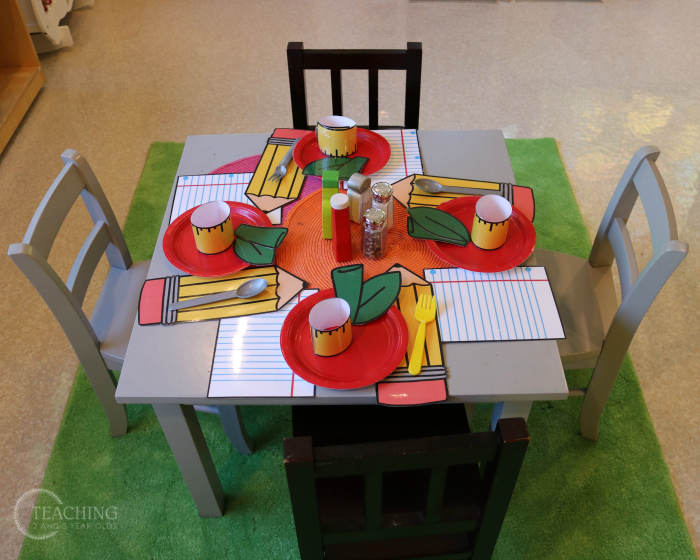
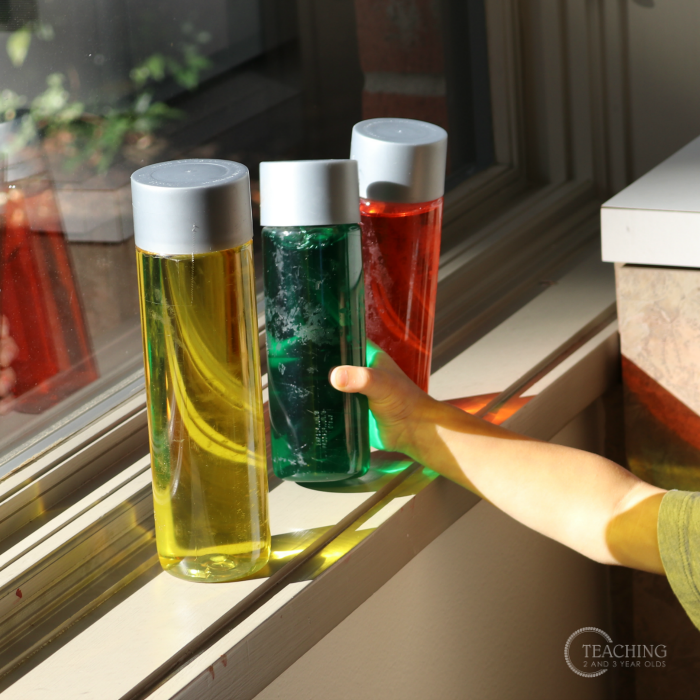
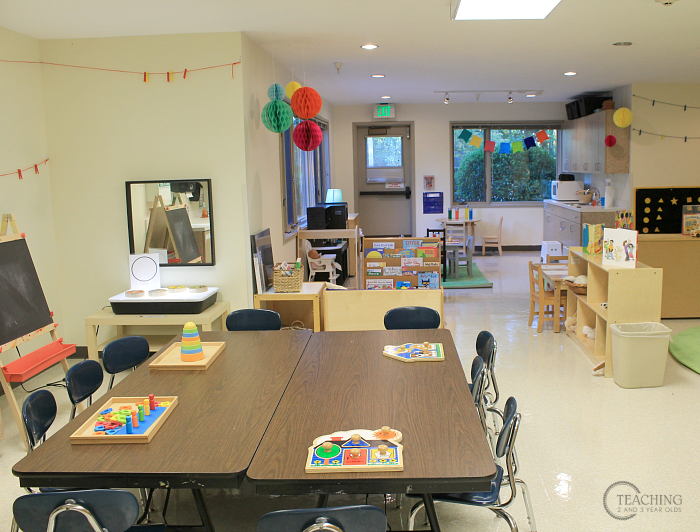
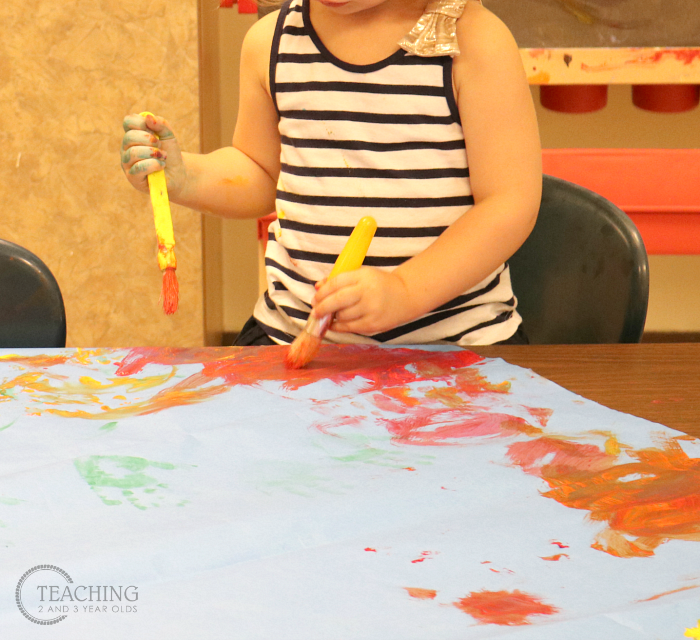
Are they engaged? Or are they throwing things around, not seeming to focus on one particular activity? What do they seem to be drawn to the most? I like to use centers time for observations. I am down on the floor with them, getting a feel for how they are using our toddler classroom. I am watching as they interact not only with the materials, but with each other. And every single year I learn something. And every single year I change something. I have found that trains are a huge hit with toddlers, so I make sure they are available. Last year I scored a train table that the church we reside in was about to give to Goodwill. They didn’t have space for it, apparently. I had always wanted a train table in my classroom, but previously I had been in a much smaller classroom and there simply was no room. Now that I was in a new, much larger room, I had the space for one. It has been the best piece of furniture! And, of course, our play kitchen was available, because lots of food needed to be cooked! We made sure to have our dolls, doll bed, and doll high chair available, as well as some play food. You can find the table setting printable here We also got to use our brand new Simplay3 Garden View Kitchen and Playhouse. Adhering to my less is best rule, I simply put our color discovery bottles on our science table. They ended up on the windowsill where the morning sun greeted us. During centers time we use our big table for activities such as puzzles, fit-togethers, color sorting, counting, and other skill-building activities. We only have 3-4 activities on this table at the start of the year, and slowly add more as the year progresses. We put our circle pages from our printable circle packet on the table as well as chunky crayons. Since our shape for September is the circle, we invited the children to make a circle with our rainbow blocks. I conveniently have our playdough near the entrance to our classroom as it helps children who might have a hard time leaving their parents or caregivers. They will often start at this center before moving onto the other areas of the toddler classroom. Traditionally I don’t put out paint on our first day – or even week – of school, because was just too much while the children were adjusting to their new environment. However, during open house one of my students was really upset that there was no paint. So I promised him I’d have paint on the first day. I chose watercolor palettes because they are easy for children to use. This group of 2 year olds LOVED handled it like they’ve been painting for years! CLICK HERE to see my tips on setting up the art table for the first weeks of school! Most years this would have been really difficult to handle on the first week of school, but this year’s children showed me they were ready. I kept thinking of last year’s group when I planned our circle time activities for our toddler classroom. While I know I should never compare one class to another, I decided to keep it super simple. Thank goodness I filled my circle time basket with extra books, songs, and flannel board pieces, because it was clear that this group could sit and listen to more than what I had planned. I quickly went to plan B, which was to add more activities to the circle time, since they were so engrossed and happy. Another reminder to always have a back up plan! As I’ve discussed in other posts, it’s very important to balance quiet time with active time. We are lucky to have a gym we can use almost every day, plus later take the children outdoors. They need to have time to move their bodies! Something else I learned during my 20 years of teaching, from personal experience: decide before the first day of school what your routine will be like, and start it on the very first day. Trust me on this. It can be very tiring to keep showing them how every little thing is done, but you will be so glad you took that time months from now. An example is lining up to wash hands at our classroom sink. If I were to just tell them to “line up to wash your hands”, it might be too vague. Plus we all know that toddlers are not meant to stand in a line, or wait for more than a second. However, last year I discovered something that worked like a charm: colored self-adhesive circles.
Rather than tell them to go “stand in line”, I can say, “stand on the yellow circle until it’s your turn to be on the step stool”. I made sure to be right there so I could show them where the circle was, and make sure they waited until it was their turn to use the step stool to wash their hands at the sink. I showed them how to turn on the water, get soap, wash, rinse, and take one paper towel to dry their hands. Then I showed them how to go down the stool and throw the paper towel in the garbage. It won’t be long until they will need much less assistance with this step! (Our 3 year olds are much more independent, and require little to no assistance, but we are always close to our 2 year olds when they are washing hands.) I was once again reminded that no 2 classes are ever alike, and what worked last year might not work this year. While each year gives you more perspective, you need to stay flexible. Take the time to observe how the children are interacting with the materials and each other. Tweak things right away when you feel it’s necessary. Know it’s okay to realize something you took great care in planning just isn’t going to work with this particular group at this particular time. Don’t take it personally. Just make the changes necessary to give your current class what they need. Want to talk with other teachers and caregivers of toddlers and preschoolers? Join my FREE private group on Facebook! We have great discussions going on every day. Ask for an invite and then make sure to answer the questions so I can approve you! 👉 Click here: Teaching Toddlers and Preschoolers I give tours of how our toddler and classrooms are set up each week, plus I share tips and activities that are actually done in my classroom with my students! Click here and subscribe: Teaching 2 and 3 Year Olds on YouTube I have helped create each of these packets, along with a team of talented educators and homeschoolers. Easy to follow activity plans include activity modifications and adaptations to meet the needs of all learners. Every theme comes with recommended reading lists, songs, material lists, and more. Click on the graphics below for more details. Toddlers (18 – 36 months):
Preschool (3 – 5 Years):
Here is my Privacy Policy