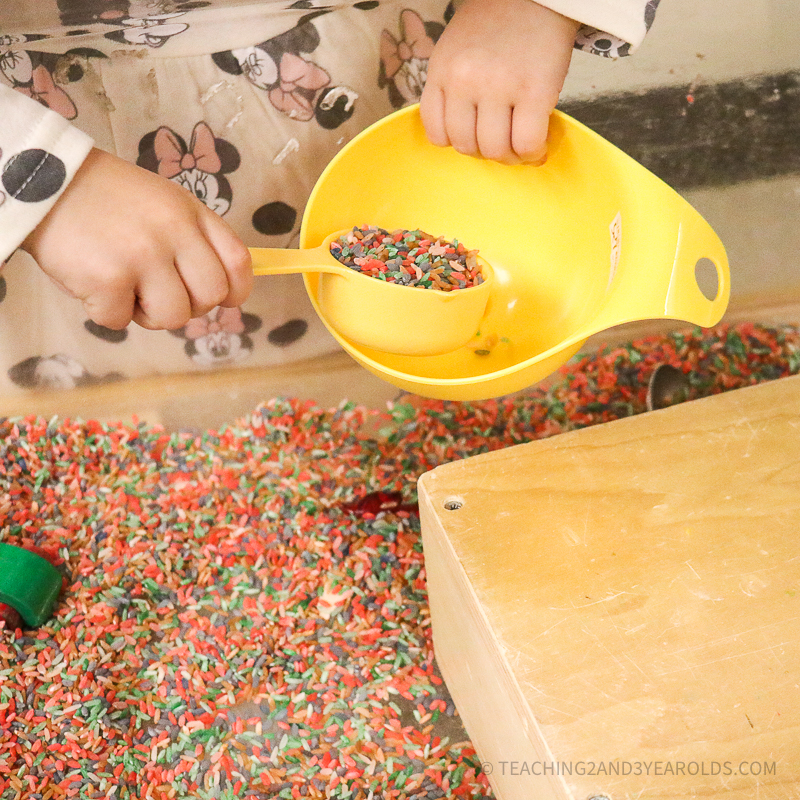
How to Dye Rice Rice is a favorite filler for sensory bins. You can dye it different colors, add your choice of accessories, and young children love the way it feels in their hands. Because it’s so versatile, you can use it year around, adding seasonal or specific themed pieces. Super easy to make, fun to work with! Pouring. Over and over again. This is what toddlers love to do! During those motions the hands and fingers are getting strengthened. So, when I’m planning any sensory bin, I keep that in mind. Rice and Apples Sensory Bin Star Sensory Table Spider Sensory Play Alphabet Flower Sensory Bin Each of these provided hours of hands-on fun with our toddlers and preschoolers! During one of my IKEA shopping sprees, I eyed a set of funnels that have proven to be amazing for sensory play. I love the handles that make them easier for our toddlers to hold! But, of course, you can use funnels you already have. (But if you happen to venture to IKEA anytime soon, grab a set!) I wanted something to set the funnels in, so I used our hollow blocks. This became a pouring station that our toddlers and preschoolers loved!
Funnels Some sort of scoops (we used measuring cups, scoops, and plastic shot glasses) Dyed Rice Hollow blocks (optional)
If you don’t have hollow blocks, or anything similar that the funnels can sit in, no worries. The children can hold the funnel with one hand while using the other hand to move the rice. In fact, even though I had this set up with the blocks, some children preferred holding the funnels.
Grab a gallon sized plastic baggie that can be sealed. Pour about a cup of rice inside the bag. Add about a teaspoon of white vinegar. Add as much coloring as desired. (I love using Wilton icing color!) Seal the bag and shake until the rice is coated well. Open the bag and dump the rice onto a paper towel, spreading it out so it’s a very thin layer. Allow to dry thoroughly.
If you want to have different colors of rice, do the above procedure for each color and then, when dry, mix the colors. Once they actually picked up the funnels, they realized the rice was falling through. During this hour, our toddlers and preschoolers can move around the classroom, visiting desired centers as little or as often as they’d like. Often children will visit our sensory table numerous times. Because toddlers have shorter attention spans, it’s not uncommon for them to spend a few minutes at the table here and there. They started scooping the rice and pouring into the funnels. It took awhile for them to realize that the rice would slowly fall from the hole in the funnel. They just enjoyed all the scooping and pouring involved. Some of the children had fun scooping from one container to the next. Children love the way it feels. They cannot resist poking their fingers into it!
How to Store Dyed Rice
We usually rotate our sensory bins every two weeks (depending on the interest). When we are ready to change the materials, I removed everything, leaving the rice for last. I then pour the rice into a plastic container or a sealable gallon-sized storage bag (I sometimes need two). Our preschool keeps all of our sensory bin fillers in our storage room on designated shelves. The rice usually lasts at least a year, depending on how much it was used.
Ready for a new sensory bin idea?
Check out this post: Big Collection of Sensory Table Activities for the Entire Year A Week’s Worth of Alphabet Ideas Learning With Legos Here is my Privacy Policy