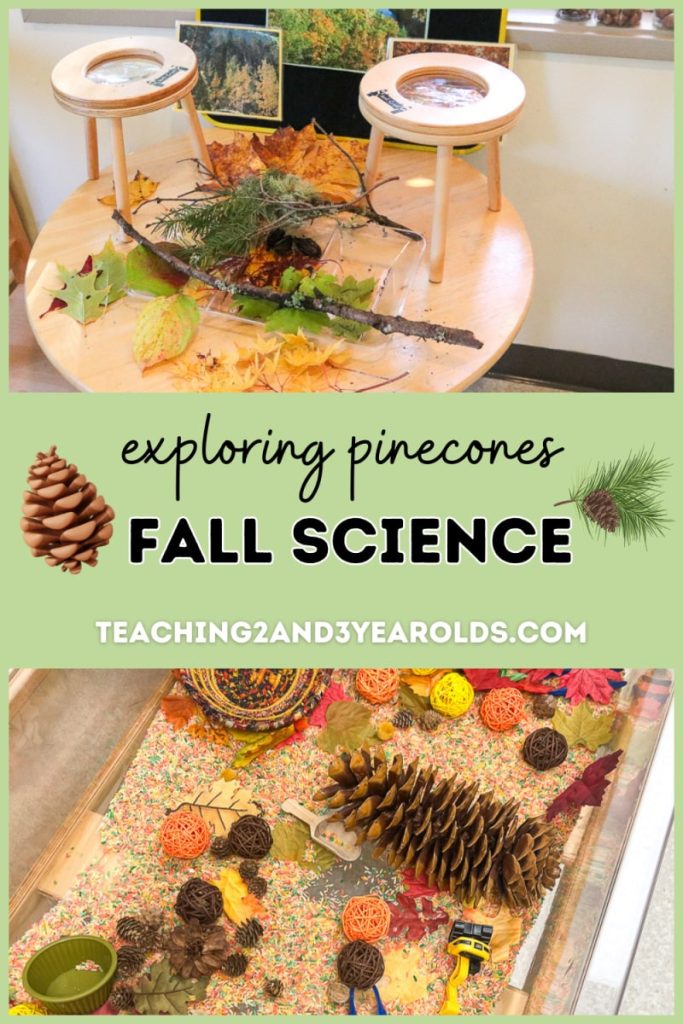
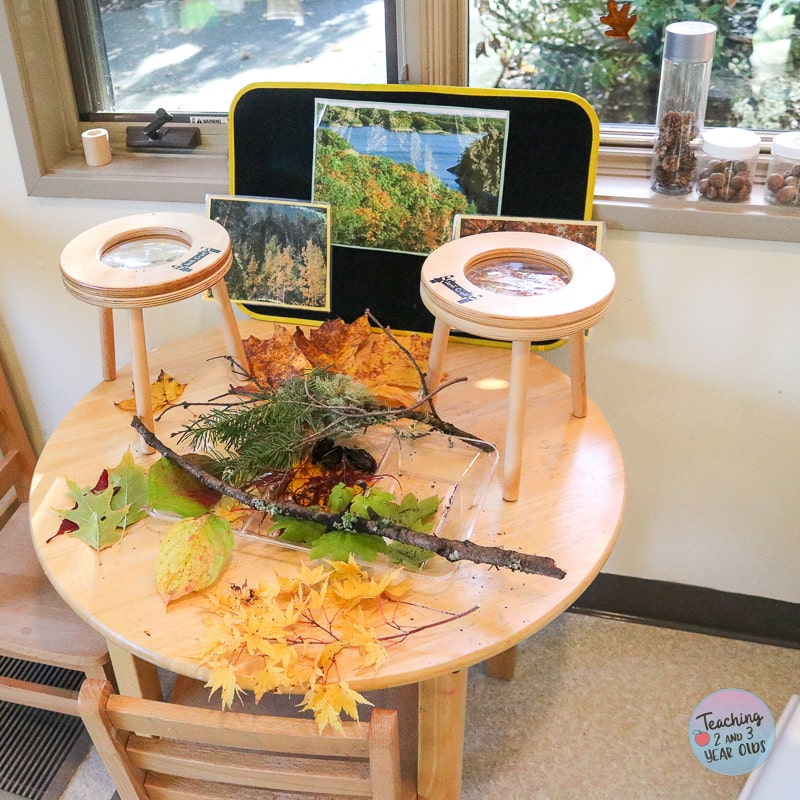
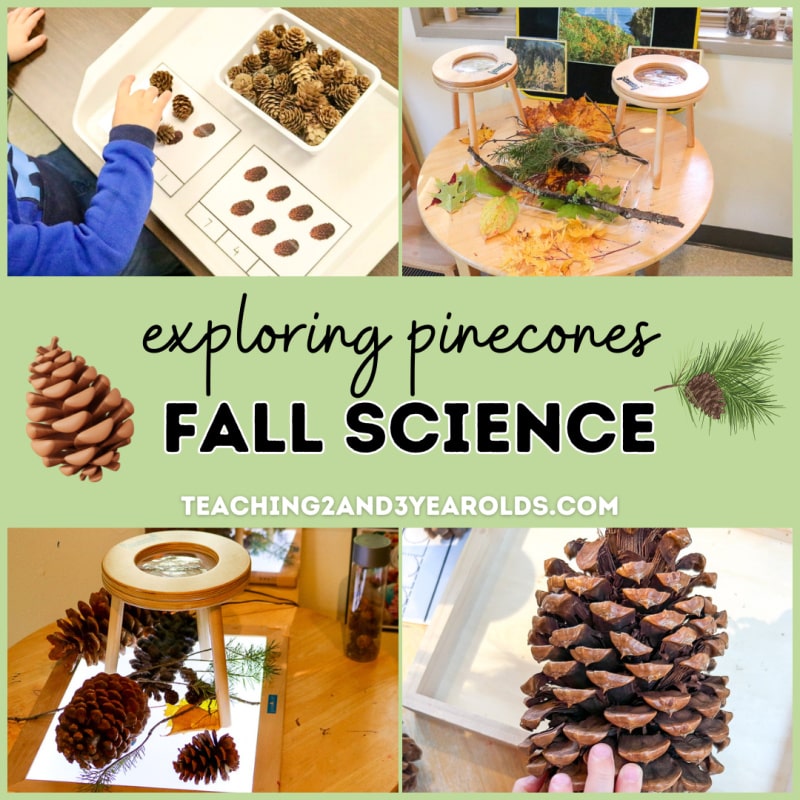
In the above photo we took what we found on a nature walk and brought it to the science and nature table. I also added fall photos and we compared them to the tress we saw outside. The month of November here means lots of fall activities, including pinecone exploration. We have an over abundance of pinecones in our area, so it’s easy to find an assortment to study. Pinecones are at the science table, inside the sensory bin, part of our table activities, and even our art table! When I say “hands-on learning”, this is exactly what I’m talking about. Watch the video: Rather than separate our fall themes, I lump them all together during this time. We study not only pinecones, but also squirrels, acorns and leaves. And we also have woodland animals in our block area. In this post I will share some of what we do with pinecones.
Preschool Pinecone Exploration
Science and Nature Table
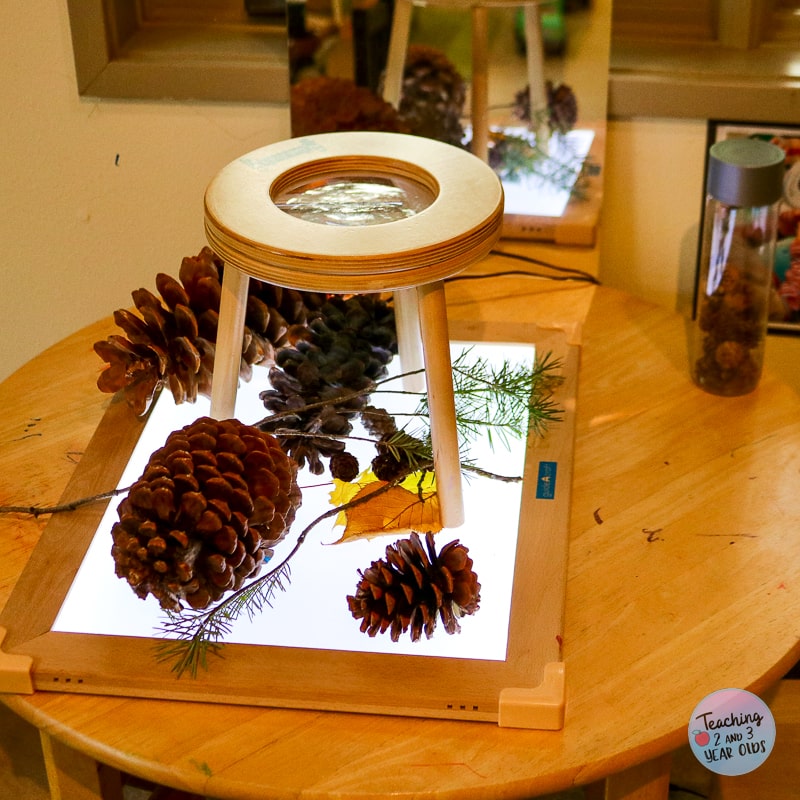
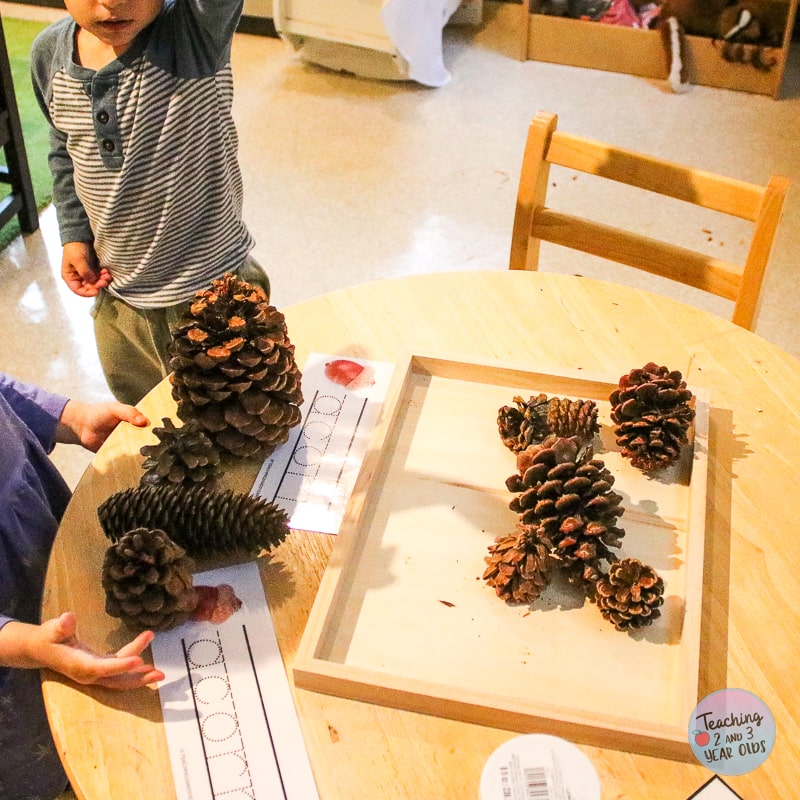
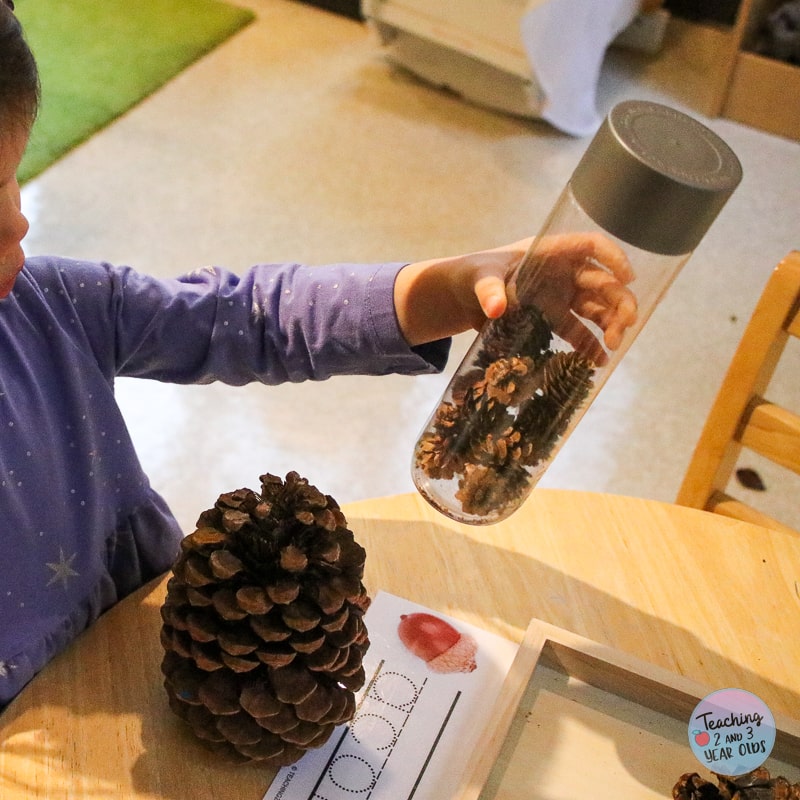
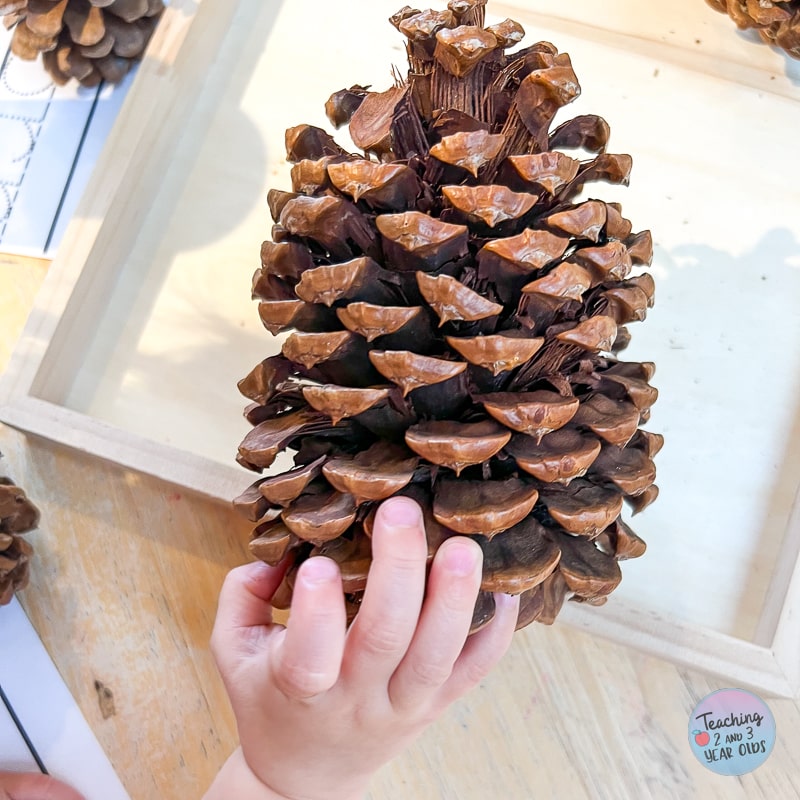
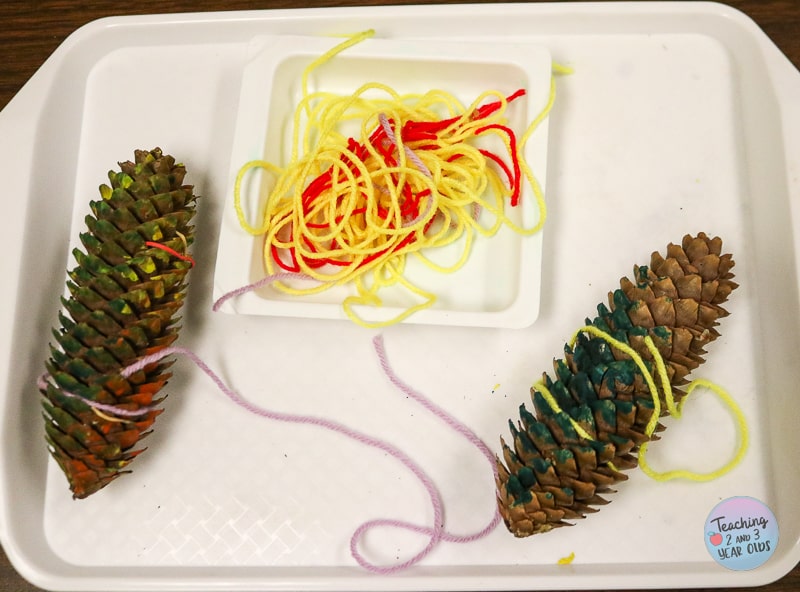
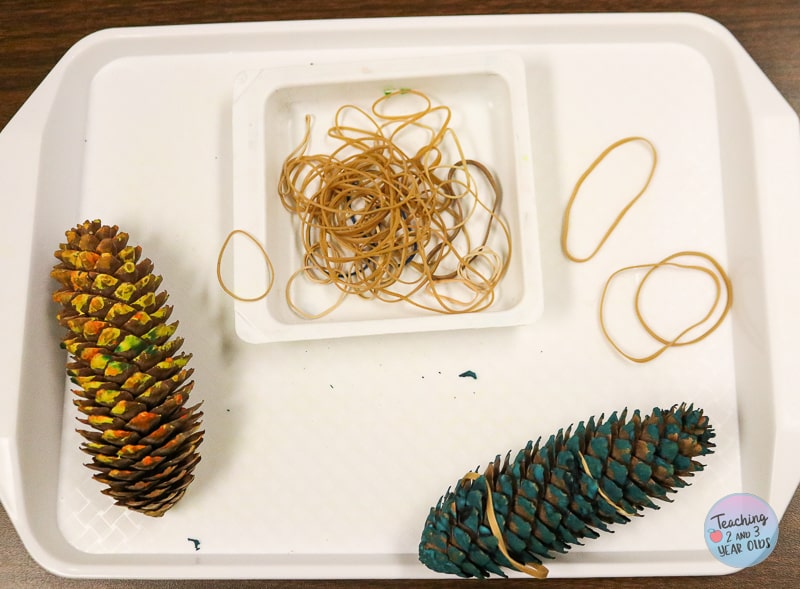
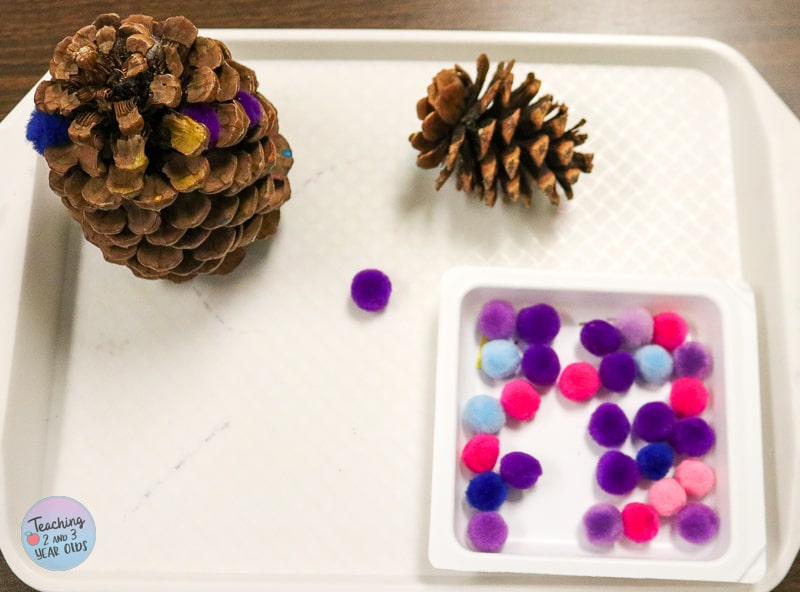
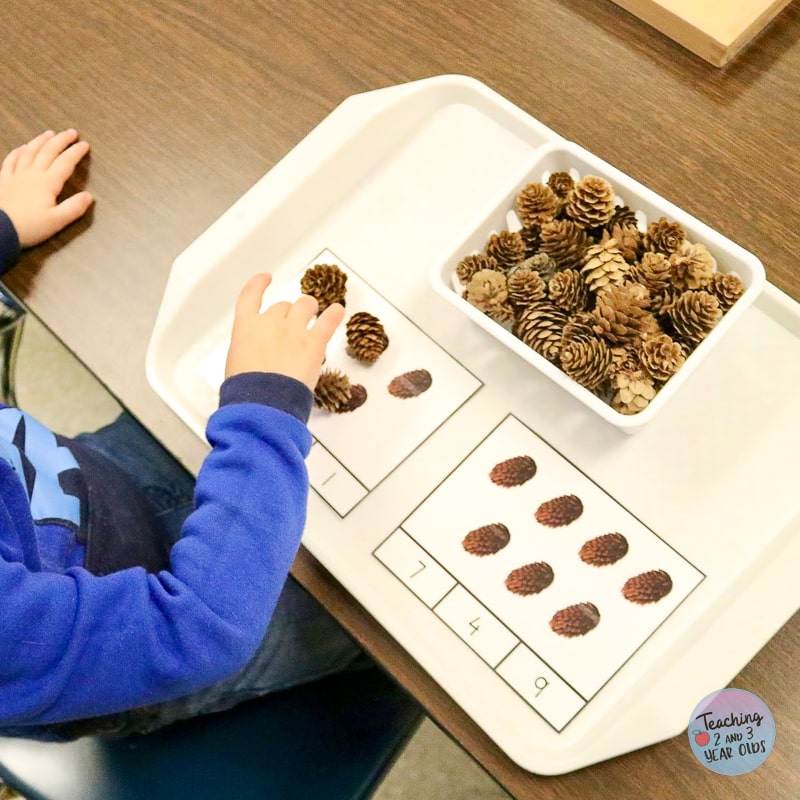
I set this up a bit differently each year, but there are always pinecones involved. In the above photo I focused more on a variety of pinecones, although there still are branches and leaves. I added a tabletop light table, too, and a pinecone discovery bottle. I also added some picture/word cards from our short tracing words packet. The children noticed the different sizes, favoring the largest pinecones. This is similar to the yarn activity, except using a rubber band instead. Both were a bit of a challenge for our two year olds, so it was probably more suitable for the three’s class. (Although a few of the two’s were able to wrap the yarn around the pinecone.) Two’s – The two year olds placed one small pinecone on top of the ones on the card and counted them. Three’s – The three year olds counted the pinecones on the card, identified the number, and clipped a clothespin to that number.
Sensory Bin
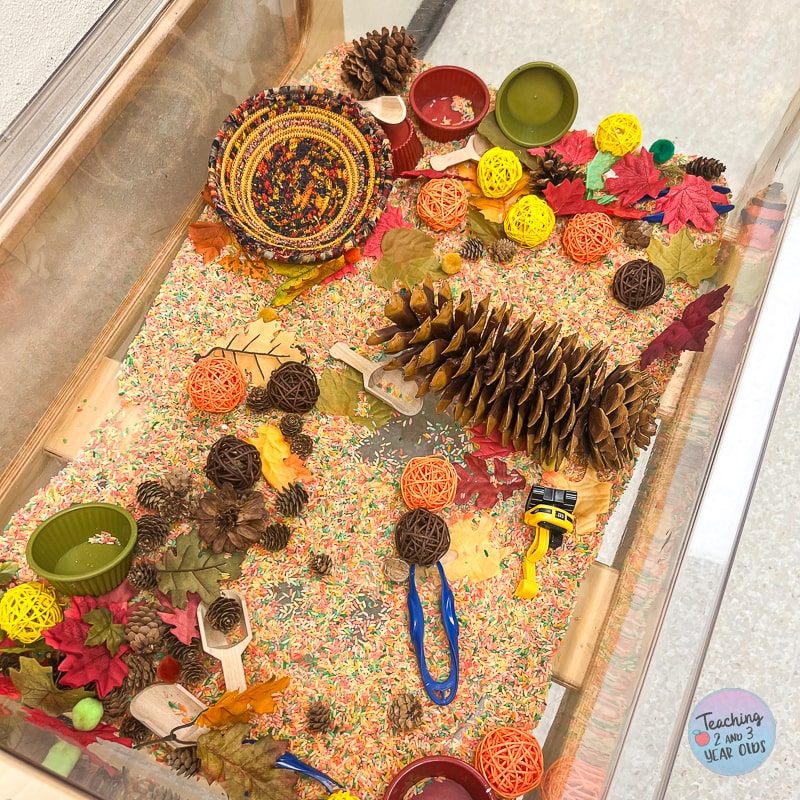
We used brown dyed rice, bowls, scoops, leaves, rattan balls and pinecones in our sensory bin. You can find a similar one here. Here is my Privacy Policy